SodaBoost Testing and Quality: What Is and Is Not Published
Written by the SodaBoost editorial team
Last updated · Who reviewed this page · How we write and review
The SodaBoost label says Produced in a GMP Facility and Assembled in the USA, but names no factory, certifier or lab. SodaBoost is not FDA approved: FDA does not approve supplements, and registration describes a factory. No independent lab report or USP or NSF seal is published, and the lot and CoA codes are draft labels.
What quality claims does SodaBoost make?
SodaBoost makes two quality claims on its label: “Produced in a GMP Facility” and an “Assembled in the USA” flag. Seller graphics add three seals: GMP, money-back and support.
None of these is a lab test of the gummies. The table shows what each one does and does not tell you.
 GMP seal: no certifier or audit date named
 Money-back seal: the 60-day window, not a quality test
 Support seal: the order desk, not a lab
| Claim or seal | Where it appears | What it does not tell you |
|---|---|---|
| Produced in a GMP Facility | Label | Which factory, who audited it, or when |
| Assembled in the USA | Label flag | Where each herb was grown or extracted |
| GMP seal | Seller graphic | A certifier you can look up |
| Money-back seal | Seller graphic | Anything about contents or effect |
| Support seal | Seller graphic | Anything about testing |
What does “Produced in a GMP Facility” mean on SodaBoost?
It means SodaBoost is made in a factory that the seller says follows Good Manufacturing Practice. GMP rules cover clean rooms, trained staff, correct labels and batch records.
The label does not name the factory, a certifier or an audit date. So the line is a statement from the label, not a certificate you can check.
Questions worth asking about any GMP line
- Which company or body audited the factory?
- When was the last audit?
- Which facility made this batch?
- Can the seller share the certificate?
None of these answers is published for this product. To get them, ask the order desk.
Is SodaBoost FDA approved?
No. Like every dietary supplement, SodaBoost carries no FDA approval. FDA does not approve supplements for safety or effectiveness before they are sold (FDA, 2022).
FDA cannot approve a supplement before sale, and a proprietary blend does not have to list how much of each ingredient it holds (FDA, 2026). That is why the 82 mg blend shows only one amount, the 5 mg of caffeine.
What “FDA-registered facility” means
The SodaBoost label does not print an FDA-registered claim. If you see that phrase in an ad, it describes a factory listed with FDA. It says nothing about the formula.
Is SodaBoost third-party tested?
No independent lab report for SodaBoost has been published. The lot SB-26/SO-1306 and CoA SB-1306-26-SO codes in the seller's materials are draft labels, not lab proof.
So nobody outside the seller has shown, in public, that each gummy holds what the label says. The table lists what is and is not published.
| Quality record | Status on October 11, 2026 |
|---|---|
| Supplement Facts label | Published |
| GMP facility line | Published on the label |
| Independent lab report | Not published |
| Lot label | SB-26/SO-1306 (draft label) |
| Certificate of analysis | SB-1306-26-SO (draft label) |
| Testing lab name | Not published |
| Manufacturer name | Not published |
| Amount of each herb in the blend | Not published |
| Clinical study of the finished gummy | Not published |
The batch-verify page shows how to compare these codes with your own bottle.
How are proprietary blends like the SodaBoost blend tested?
A lab can test a blend batch for identity and contaminants, but no such report is public for SodaBoost. The label does not have to show each amount inside the blend.
Research works differently. Most studies test one ingredient at a time, so the effects and safety of a blend are unknown unless the blend itself was tested (NIH ODS, 2026).
One blend, nine names
Muira puama, maca, catuaba, green tea, caffeine, ashwagandha, L-arginine, tribulus and horny goat weed share 82 mg.
One printed amount
Only caffeine has its own number: 5 mg.
A footnote
The 82 mg equals about 567 mg of dry powders before extraction.
The supplement facts page reads the whole panel line by line.
What does the FDA statement on the SodaBoost label mean?
The FDA statement says the label claims have not been evaluated by FDA, and that SodaBoost is not meant to diagnose, treat, cure or prevent any disease. It is standard on supplement labels.
Claims about supporting normal body function are not pre-approved and must carry that statement (FDA, 2024). The SodaBoost front label prints no benefit claim at all.
| Wording | Plain meaning |
|---|---|
| Dietary Supplement | Sold as a supplement, not a drug |
| Not evaluated by the FDA | No FDA review of claims before sale |
| Not intended to diagnose, treat, cure or prevent | Not a medicine for any disease |
| Sales FAQ: energy, stamina, vitality | Marketing positioning, not a label claim |
So SodaBoost is not an ED treatment and not a testosterone medicine.
Does SodaBoost carry a USP or NSF seal?
No. The SodaBoost label shows no USP or NSF seal. Those groups run independent programs that test products and let passing ones carry their mark.
A missing seal does not mean a product is bad. It means no outside group has publicly checked it.
| Seal type | Who checks | On SodaBoost? |
|---|---|---|
| USP Verified | An independent standards group | No |
| NSF Certified | An independent testing group | No |
| GMP facility line | Not named | Yes, on the label |
| Batch CoA from a named lab | A lab | Not published |
How can you check SodaBoost quality yourself?
You can check three things at home: the source, the label and the seal. A lab test is the one check you cannot do yourself.
Use these boxes when your order arrives, then ask the order desk the questions in the list.
Buy from the Licensed U.S. retail desk. Keep the order email and ID.
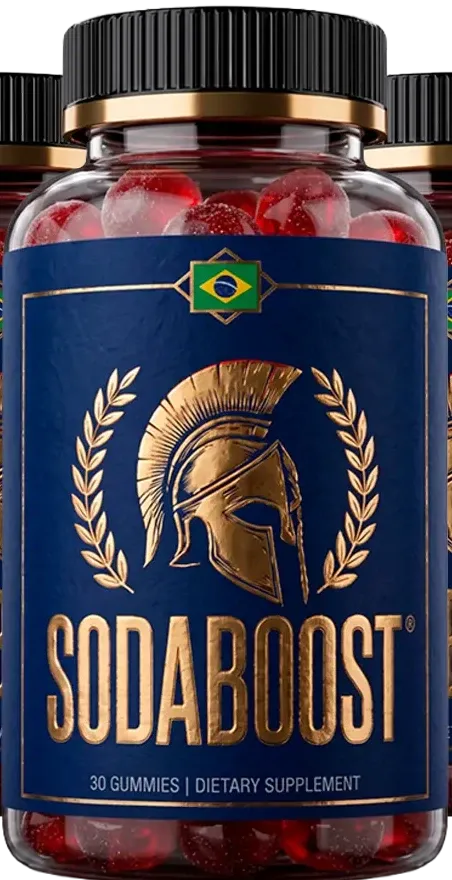
Navy and gold, Spartan helmet, 30 Gummies, Lakeland, Florida distributor.
The seal under the cap must be whole.
Questions to ask the SodaBoost order desk: 0 of 4 checked
The ingredients page compares each herb with the doses used in research.
SodaBoost testing and quality: common questions
Questions people type into Google and Bing, answered from the label and the sources on this page.
Is SodaBoost third-party tested?
No third-party lab report for SodaBoost has been published. The lot and CoA codes in the seller's materials are draft labels, not test results.
What does GMP certified mean?
GMP means a factory follows Good Manufacturing Practice rules for clean, consistent production. The SodaBoost label says “Produced in a GMP Facility” but names no certifier or audit.
Is “FDA registered facility” the same as FDA approved?
No. Registration means a factory is listed with FDA. FDA does not approve supplements before sale and does not issue registration certificates.
Are male enhancement supplements tested for hidden drugs?
Not before sale. FDA tests products it suspects and lists those found with hidden drugs. SodaBoost was not on that list as of October 11, 2026, which does not prove safety.
What is USP or NSF certification?
USP and NSF run independent programs that test supplements and allow a seal on products that pass. The SodaBoost label shows no USP or NSF seal.
Does FDA test supplements before they are sold?
No. FDA does not approve supplements for safety or effectiveness before sale. The maker is responsible for safety and label accuracy.
Can supplements contain ingredients not on the label?
Yes, it happens. FDA has found hidden prescription drugs in many products sold for sexual enhancement and energy, and some catuaba products have contained unlisted drugs.
How are proprietary blends tested?
A lab can test a blend batch, but the label need not show each amount. For SodaBoost, no lab report is published, so the share of each herb in the 82 mg blend is unknown.
Who manufactures SodaBoost?
The manufacturer's name is not published. The label names the distributor, Instituto Experience of Lakeland, Florida, and says Assembled in the USA.
Has the SodaBoost gummy itself been studied?
No clinical study of the finished gummy has been published. Research on its herbs tested single ingredients at much higher doses.