Gummy or Capsule for Men: SodaBoost Dose Compared
Written by the SodaBoost editorial team
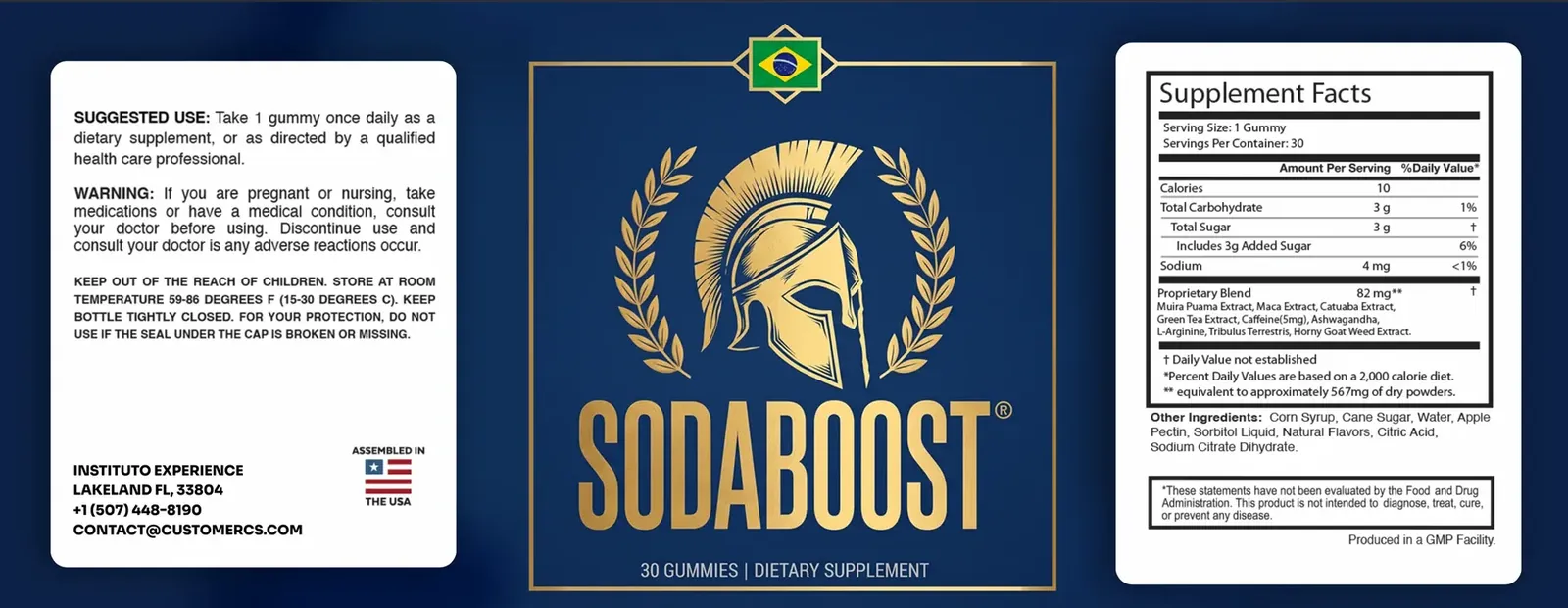
A capsule usually holds more active ingredient than a gummy, while a gummy is easier to chew and take. One SodaBoost gummy has 3 g of added sugar and an 82 mg blend of nine ingredients. Here is how the two forms compare for men.
A capsule usually holds more active ingredient, because a gummy also carries sugar, water and pectin. One SodaBoost gummy has 3 g of added sugar (6% of the Daily Value) and an 82 mg blend shared by nine ingredients. Judge any form by printed amounts compared with study doses, not by taste or shape.
Gummy vs capsule: which gives you more of what you pay for?
Most of the time, a capsule gives you more active ingredient per dose. A gummy must also carry sugar, water and a gelling agent, so the actives get less room.
That does not make every capsule good or every gummy bad. The shape matters less than two numbers: how much of each ingredient you get, and how much the studies used.
| What to compare | Typical gummy | Typical capsule | SodaBoost gummy |
|---|---|---|---|
| Base | Sugar syrup, pectin or gelatin, flavor | A gelatin or plant shell around powder | Corn syrup, cane sugar, water, apple pectin |
| Sugar | Usually some | Usually none | 3 g added sugar (6% DV) |
| Room for actives | Small | Larger | 82 mg blend for nine ingredients |
| Taste and habit | Easy to chew, no water | Swallowed with water | Chew 1 a day |
| Calories | A few per piece | Close to zero | 10 per gummy |
How much sugar is in a gummy supplement like SodaBoost?
One SodaBoost gummy has 3 grams of total sugar, and all 3 grams are added sugar. The label lists that as 6% of the Daily Value, with 10 calories and 3 grams of carbohydrate.
The sugar comes from corn syrup and cane sugar, the first two other ingredients on the label. Water and apple pectin follow them.
Is a 3 g sugar gummy a lot?
One gummy is a small amount of sugar, but it is not nothing. The FDA Daily Value for added sugar is 50 grams a day, so 3 grams is about 6% of it (FDA, 2026).
The 2025-2030 Dietary Guidelines go further. They say added sugars are not part of eating real foods and are not recommended (USDA/HHS, n.d.).
Why are gummy doses so small?
Because the candy part takes most of the space. A gummy has to taste good, hold its shape and stay soft, and that needs sugar, water and pectin.
Look at the SodaBoost numbers side by side. The sugar is 3 grams, or 3,000 mg. The whole active blend is 82 mg. By weight, there is about 36 times more sugar than blend in each gummy.
What the two stars on the label mean
The label adds that the 82 mg is equivalent to about 567 mg of dry powders. That describes the plant material before it was concentrated. It does not tell you how much of each herb you get.
FDA rules let a proprietary blend print only its total weight, not the amount of each part (FDA, 2026). So in a small blend, you cannot tell if one herb takes up most of it or only a trace.
How many gummies would it take to match a study dose?
Far more than anyone should eat. Even if the whole 82 mg blend were a single herb, you would need many gummies to reach the amounts used in research.
This math is a thought test, not advice. The label says take one gummy a day, and extra gummies would also stack up sugar fast.
| Ingredient | Study dose | Whole blends needed | Sugar that would add |
|---|---|---|---|
| Maca (Shin et al., 2010) | 1,500 mg a day (lowest) | About 18 | About 54 g, over the daily limit |
| Ashwagandha (Lopresti et al., 2019) | 600 mg a day | About 7 | About 21 g |
| Caffeine (Mayo Clinic, n.d.) | About 96 mg in a cup of coffee | About 19 gummies at 5 mg each | About 57 g |
The real gap is wider, because nine ingredients share the 82 mg. Our post on maca, muira puama and catuaba walks through the herb studies in detail.
Are gummies absorbed better than capsules?
There is no good evidence for that claim in the sources we use. No study of the finished gummy has been published, so nobody has measured it.
The NIH Office of Dietary Supplements notes that most research tests single ingredients, so a blend's effects are unknown unless the blend was tested (NIH ODS, 2026). Absorption cannot make up for a dose that is many times smaller than the studies.
The FTC holds sellers to the same idea. It says health claims generally need human trials, and the dose and formula studied should match the product being sold (FTC, 2022).
What else is inside a men's gummy?
The other ingredients tell you about texture, diet fit and comfort. Here is what the SodaBoost label lists after the blend.
Corn syrup and cane sugar
The sweet base and the source of the 3 grams of added sugar.
Apple pectin
A fruit fiber that sets the gummy. No gelatin is listed, but the label does not say vegan.
Sorbitol liquid
A sugar alcohol used in many gummies. Its amount is not printed.
Citric acid and sodium citrate
Common gummy acids for tartness. The label shows 4 mg of sodium per gummy.
Natural flavors
Give the taste. The label does not name them.
Water
Part of the gel. It is one reason gummies weigh more than their actives.
How do you read a gummy label in one minute?
Start with the numbers, not the front of the bottle. Four checks tell you most of what the gummy can and cannot do.
- 1
Find the sugar line
Note the grams of added sugar and the % Daily Value per gummy.
- 2
Find each active amount
Look for a number beside every ingredient, not just a blend total.
- 3
Compare with studies
Check the dose used in human trials and see how close the label gets.
- 4
Read the other ingredients
Look for gelatin or pectin, sugar alcohols and anything you avoid.
Our guide to choosing a men’s gummy adds seals, red flags and a fuller checklist. The SodaBoost supplement facts page reads each line of this label in plain English.
When does a gummy like SodaBoost make sense?
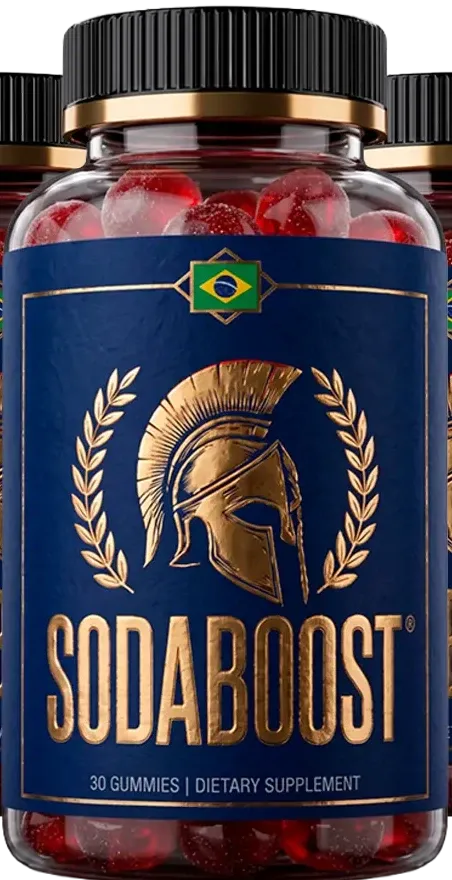
A gummy fits best if you dislike pills and want a simple daily habit with a known, small amount of sugar. It is a poor fit if you want doses that match the research.
For a dose close to a study, a single-ingredient capsule with its amount printed is usually the clearer choice. Talk to your doctor first if you take any medicine.
If you like the gummy format, SodaBoost is one chewable gummy a day with nine named ingredients. The pricing page shows the current kits, and the checkout confirms the total before you pay.
Gummies vs capsules: common questions
Questions people type into Google and Bing, answered from the label and the sources on this page.
Do gummies have less active ingredient than capsules?
Often, yes. A gummy is mostly sugar, water and pectin, which leaves little room for actives. In SodaBoost, nine ingredients share 82 mg, while the sugar alone weighs 3 grams.
How much sugar do gummy vitamins have?
It varies by brand, so read the Supplement Facts panel. One SodaBoost gummy has 3 grams of total sugar, all of it added, plus 10 calories.
Why are gummy doses so small?
The candy base takes up most of the gummy. Corn syrup and cane sugar are the first two other ingredients, so the actives get what space is left.
Are gummies absorbed better than capsules?
None of the sources we use shows that. No study of the finished SodaBoost gummy has been published, so the amount on the label is the better guide.
Do sugar alcohols in gummies cause stomach upset?
Some people notice it with sugar-free sweets. SodaBoost lists sorbitol liquid but does not print how much, so watch how your stomach feels and stop if it bothers you.
Are capsule supplements more effective?
Not because of the shell. What counts is whether the dose and formula match the human studies. A capsule with a tiny dose is no better than a gummy with one.
How many gummies equal one capsule dose?
There is no fixed swap. Reaching a 1.5 gram maca study dose would take more than 18 whole SodaBoost blends. The label says one gummy a day, so do not try.
Are gummy supplements bad for your teeth?
Our sources do not cover teeth. Each SodaBoost gummy has 3 grams of added sugar from corn syrup and cane sugar, so ask your dentist if you worry about sugar and your teeth.
Is a 3 g sugar gummy a lot?
On its own, no. It is 6% of the 50 gram Daily Value for added sugar. It adds up to 90 grams over a 30-day bottle, and people with diabetes should count it.
Is a SodaBoost gummy or a capsule better for men?
Neither form wins on its own. A capsule usually fits more active ingredient, while a gummy is easier to chew. SodaBoost is a gummy with 3 g of added sugar, so judge it by the printed label amounts.
How much sugar is in a SodaBoost gummy compared with a capsule?
One SodaBoost gummy has 3 g of added sugar, which is 6% of the Daily Value, and 10 calories. A plain capsule usually adds none, because it does not need sugar to set or flavor it.
Is a chewable gummy easier to take every day than a capsule?
Many men find a gummy easier because you simply chew one gummy once daily. The trade-off is a smaller dose, since a SodaBoost gummy holds an 82 mg blend and carries 3 g of added sugar.