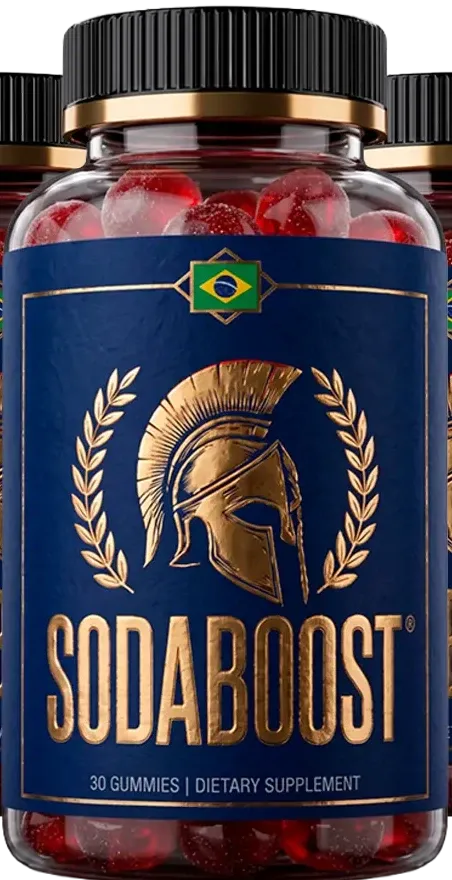
Choosing a Men's Gummy: A Buyer's Checklist for the Label
Written by the SodaBoost editorial team
Last updated · Who reviewed this page · How we write and review
Judge a men's gummy by its label first. Check that every amount is printed, compare each with doses used in human studies, count the added sugar, treat blends and drug-like promises as red flags, and confirm the refund terms. SodaBoost passes on seller contact and claim wording, but fails on printed amounts and doses.
Why choose a men's gummy label-first?
A label-first check stops you paying for doses too small to matter. Most men's gummies look alike in ads, so the Supplement Facts panel is what sets them apart.
FDA does not approve supplements before they are sold (FDA, 2022). Checking the label falls to you, and this guide gives you a method, then runs it on SodaBoost.
The SodaBoost buyer's checklist for any men's gummy
Run these ten checks on any men's gummy before you order. Tick each box only when the label or the seller confirms it.
Before you choose, check: 0 of 10 checked
No product needs a perfect score. Each unticked box is a question to put to the seller.
Are gummy supplements as good as pills? The SodaBoost example
A gummy can deliver an ingredient, but much of its weight is sugar, pectin and flavor. That leaves room for only small doses of the active part.
SodaBoost shows the trade-off clearly. Its whole blend weighs 82 mg, while the sugar in the same gummy weighs 3 g, about 37 times more.
- Gummies are easy to take and need no water
- Sugar or sugar alcohols such as sorbitol shape the taste and texture
- Heat can soften them, so storage rules matter
- Active doses are often far below capsule-style research doses
The gummy vs capsule post looks at the form in more depth.
How do I compare a gummy's doses to research?
Set each label amount beside the daily dose used in human trials. If the label amount is far lower, those trial results tell you little about the gummy.
Here is the method, with maca on the SodaBoost label as the worked example.
- 1
Find the serving
Read the Supplement Facts panel and note the serving size and every amount.
- 2
Spot the blend
If several ingredients share one total weight, note the total and how many share it.
- 3
Look up the research dose
Find the daily dose used in human trials, such as 1.5-3 g of maca.
- 4
Compare the two
Divide the research dose by the label amount, or by the whole blend when no amount is printed.
- 5
Check who was studied
Note whether the trials studied healthy men, men with ED or another group.
Maca trials used 1.5-3 g a day (Shin et al., 2010). Even if all 82 mg of the SodaBoost blend were maca, it would be about one-eighteenth of the lowest dose. The reviewers rated the evidence for sexual function as limited, even at those full doses.
Why proprietary blends are a red flag, on SodaBoost and elsewhere
A proprietary blend hides how much of each ingredient you get. On SodaBoost, nine ingredients share one 82 mg blend, and only caffeine has its own amount.
An even split would give each one about 9 mg, and any of them could be far less. None can be matched to a study dose.
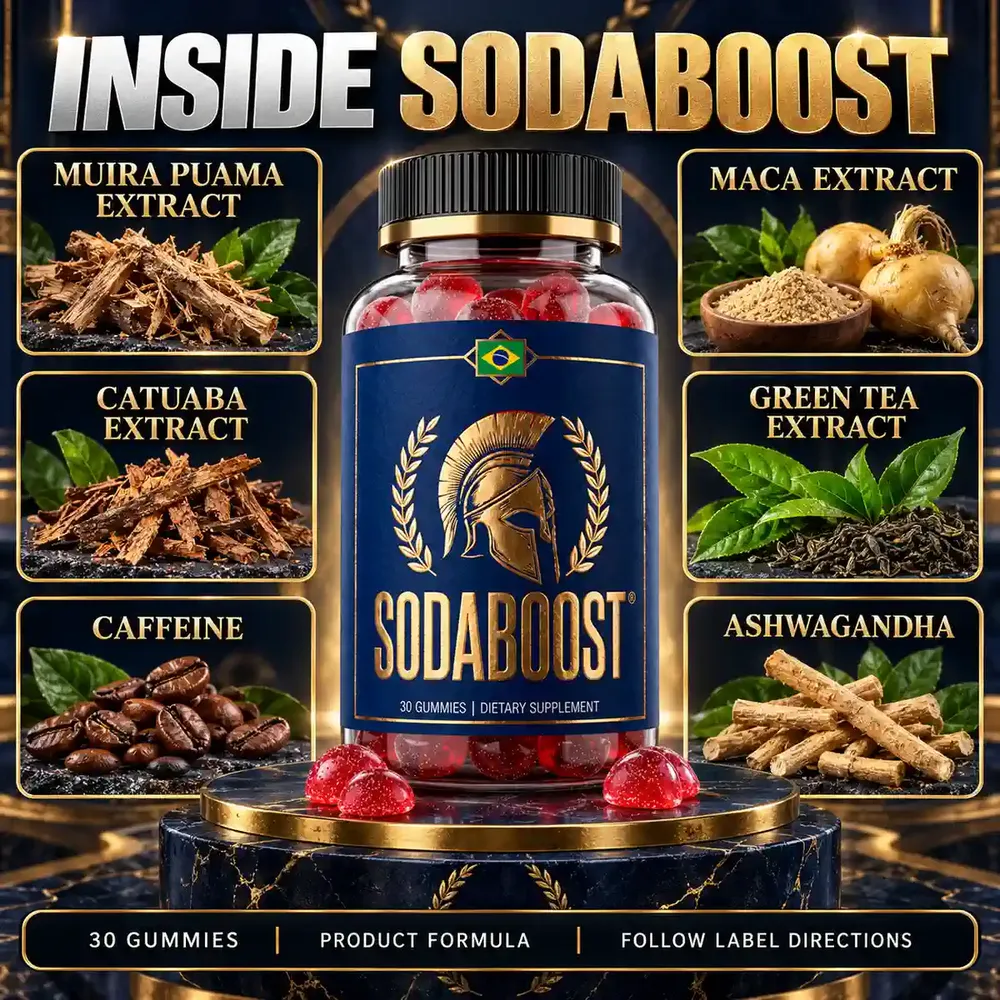
Ad graphics often show a neat row of herbs and no amounts. Always read the Supplement Facts panel itself.
The SodaBoost label adds a note that the 82 mg equals about 567 mg of dry powders. That describes the raw plant before extraction, not a larger dose in the gummy. The supplement facts page explains each line.
How much sugar is too much in a men's gummy?
The answer depends on your whole day, since the Daily Value for added sugar is 50 g (FDA, 2026). One SodaBoost gummy adds 3 g, about 6% of that.
The 2025-2030 dietary guidelines do not recommend added sugars at all (USDA/HHS, n.d.). A gummy you take every day adds up over a month.
| Daily gummies | Added sugar a day | Added sugar in 30 days |
|---|---|---|
| 1 gummy | 3 g (6% DV) | 90 g |
| 2 gummies of a 3 g brand | 6 g (12% DV) | 180 g |
| 3 gummies of a 3 g brand | 9 g (18% DV) | 270 g |
What third-party seals and quality claims should you trust?
Trust a seal you can confirm with the tester, tied to the exact product. Seals that describe a factory or a promise say less than they seem to.
FDA does not issue certificates of registration, and firms that sell them are not linked to FDA (FDA, 2024).
 GMP: factory rules
 A refund promise
- GMP. The SodaBoost label says “Produced in a GMP Facility.” The certifier and factory are not named.
- Lot and CoA. SodaBoost lot SB-26/SO-1306 and CoA SB-1306-26-SO are draft labels, not a lab report.
- Money-back seal. It protects your money, not your health, and says nothing about results.
The testing and quality page covers what is known.
Red flags in male supplement ads
The biggest red flag is a drug-like promise. FDA lists many sexual enhancement products found to contain hidden drugs (FDA, 2026), and NCCIH warns about the same problem (NCCIH, 2019).
Some catuaba products have also been found with unlisted prescription drugs (WebMD, 2026). You cannot see a hidden drug in a gummy, but you can spot the sales patterns.
- Promises of harder erections, bigger size or higher testosterone
- Claims that it works like a prescription ED drug
- “FDA approved” on a supplement
- Countdown timers and big struck-through “was” prices
- Reviews with no way to tie them to an order
- A press release dressed up as a news story
Fake or paid-for reviews break an FTC rule (FTC, 2024). The batch verify page shows how to check a bottle.
SodaBoost scored against the buyer's checklist
Here is the checklist run honestly on SodaBoost, from the label and the seller's terms only. It passes on seller contact and claim wording, and fails on doses.
A fail does not make the gummy unsafe. It means the research cannot predict a result from it.
| Check | What SodaBoost shows | Result |
|---|---|---|
| Amounts printed | Only caffeine (5 mg) of nine ingredients | Fail |
| Blend size | 82 mg shared by nine ingredients | Fail |
| Doses vs research | Lowest studied doses of five ingredients add to about 4,500 mg, roughly 55 times the blend | Fail |
| Finished-product study | None published | Fail |
| Added sugar | 3 g per gummy, 6% DV | Partial |
| Claim wording | Front label prints no benefit claim | Pass |
| Seller contact | Order desk +1 (302) 200-3480 and a returns address | Pass |
| Refund terms | 60-day window; buyer pays return postage; restocking rules not fully published | Partial |
| Lab report | Lot SB-26/SO-1306 and CoA SB-1306-26-SO are draft labels | Not published |
The ingredients page sets each ingredient beside its research dose.
Should you pick a single-ingredient supplement over SodaBoost?
A single-ingredient product is easier to judge than a blend like SodaBoost. Most research tests one ingredient at a time, so the effects of a blend stay unknown unless the blend was tested (NIH ODS, 2026).
That does not make a single herb proven. Many herbs sold to men have weak human evidence even at full doses.
Habits come before any gummy. The men’s energy guide covers sleep, caffeine and checkups.
Choosing a men's gummy: common questions
Questions people type into Google and Bing, answered from the label and the sources on this page.
Are gummy vitamins as good as pills?
A gummy can carry an ingredient, but sugar and pectin make up much of its bulk. That often leaves room for only small doses, so compare the amounts, not the form.
How do I choose a men's supplement?
Start with the Supplement Facts panel. Check that each amount is printed, compare it with research doses, and confirm the seller and refund terms before you pay.
Which details matter most on a supplement label?
Look for the serving size, an amount for every ingredient, the added sugar, a warning section and a named company. Missing amounts are the biggest gap.
Why are proprietary blends a red flag?
A blend lists one total weight, so you cannot see how much of each ingredient you get. FDA allows this on supplement labels (FDA, 2026).
How much sugar is too much in a gummy?
It depends on the rest of your day. The Daily Value for added sugar is 50 g (FDA, 2026), so one 3 g gummy is about 6%.
What third-party seals should I trust?
Trust a seal only when you can confirm it on the tester's own website, tied to a named product. A GMP seal or “FDA registered” describes a factory.
How do I compare doses to research?
Find the daily dose used in human trials and set it beside the label amount. If the label is far lower, the trial results do not carry over.
What are red flags in male supplement ads?
Promises about erections, size or testosterone, drug comparisons, countdown timers and reviews with no way to check them. Hidden drugs often travel with such claims.
Should I pick a single-ingredient supplement?
It is easier to judge. Most research tests one ingredient at a time, so a single-ingredient product is easier to match to a study (NIH ODS, 2026).